13 Easy Escape Room Ideas You Can Use
This post may contain affiliate links, please read our affiliate disclosure.
If you’re looking to plan an escape room of your own, you might be wondering where to start with designing the puzzles. Well, fear not because I’ve compiled 13 awesome escape room puzzle ideas that will get your creative juices flowing and are super simple to set up!
I’m a huge fan of escape rooms! If there is a family celebration, you can be sure that I will create an escape room activity at our house. My kids love the challenge of solving the clues, and I take pleasure in creating new games and challenges for them. My first few escape rooms used to take me a few weeks to prepare and plan. I really love going to town with setting the scene and theming the clues. Without a doubt, it is a labour of love to plan and put together.
- Puzzle Clues. Jigsaw puzzles are a firm favourite of mine. You can use a premade puzzle but your local thrift shop can be a great place to buy these. You can even create your own. Print pictures or a message onto paper and cut them into pieces to create a puzzle.
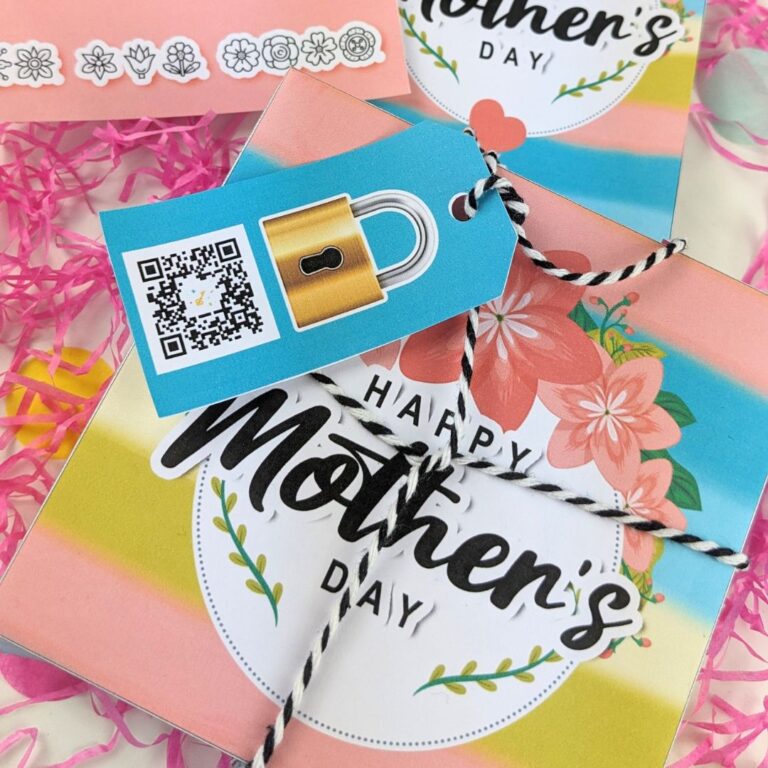
- Locks Locks Everywhere. Locks can be used to conceal clues inside boxes, bags or containers. You can even lock things shut like scissors. There are so many different types of locks available. These open a whole host of puzzle possibilities. Directional, word, colour, and key locks can be used.
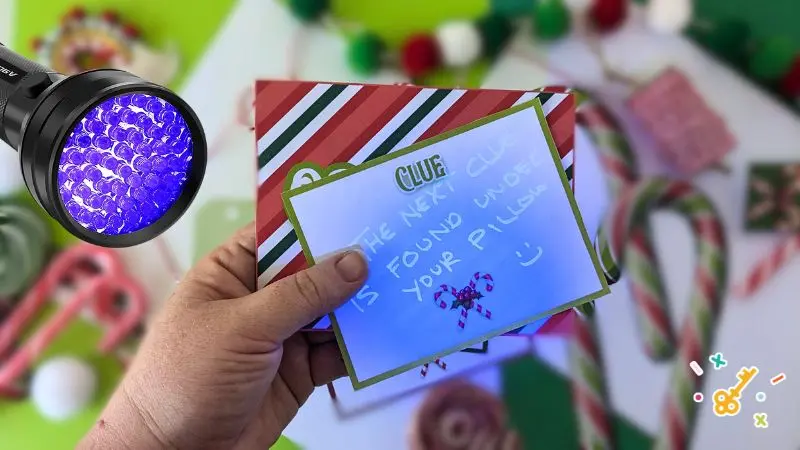
- UV Blacklight. Using UV is a fun addition to any home escape room. UV pens are an excellent tool for writing clues that players can only reveal by using a black light. Step this up a level by writing your clues in a secret code or cypher.
- Erasable Ink Fun. Frixon pens are brilliant. They come in a range of colours, but I tend to stick to black pens in my games. With these pens, you can erase the ink on the page. Young children can use the eraser on the pen’s lid; or with supervision, you can use heat to remove the ink. I use a safety lighter to make my message disappear magically. My kids absolutely loved this message reveal. I highly recommend that you try this one out.
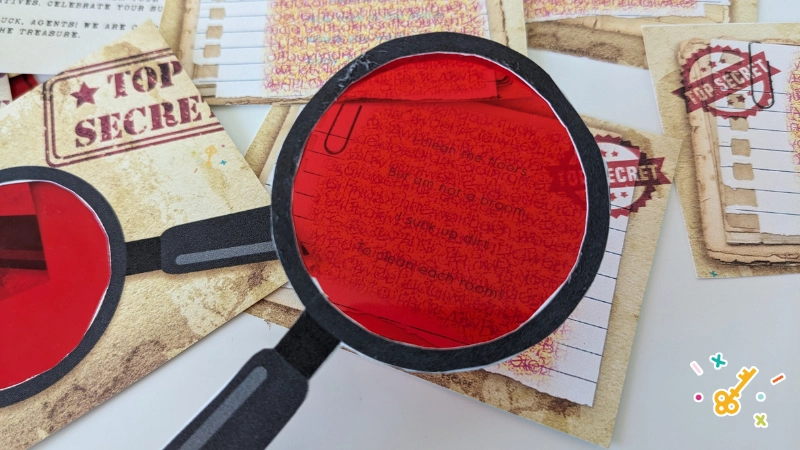
- Red Overlay Reveal. I used some red acetate for this clue. I’ve experimented with clear acetate that I coloured in, and it works, but the ink took a fair while to dry; that was probably because of the type of felt tip pen I used. Grab yourself a blue pen to write your clue. Use different shades of red drawn all over the message; the aim is to disguise the blue text. To reveal your message, lay the red acetate over the top of the image, and the blue text becomes clearer. I love how simple but effective this clue is.
- Hidden Message. Use wax crayons and paint resist technique to reveal hidden messages. Write your clue onto white paper using a white crayon. Players must use watercolour paints or pencils to reveal their message or clue.
- The first letter reveal! Ok, this could sound more exciting, but you can make this simple puzzle by creating a list or sentences that players must only read the first letter of each line. Make the puzzle easier or more difficult depending on who your target audience is. A simple list for example would work well for a children’s game.
GRAB A FREE ESCAPE GAME
Grab yourself this Printable Kids Birthday Escape Room Game 100% FREE! All you have to do is subscribe to my creative escapes newsletter, and the game will be sent right to your inbox.
- Balloon Popping Fun.Not everyone likes balloons, but I love including them in my kids escape room and treasure hunt games. I will often add clues inside the balloons. The goal is for players to pop the balloons to retrieve the clues hidden inside. Another great thing about balloons is that they come in various colours and can be used for colour-sorting activities. Opt for bio degradable balloons if you can.
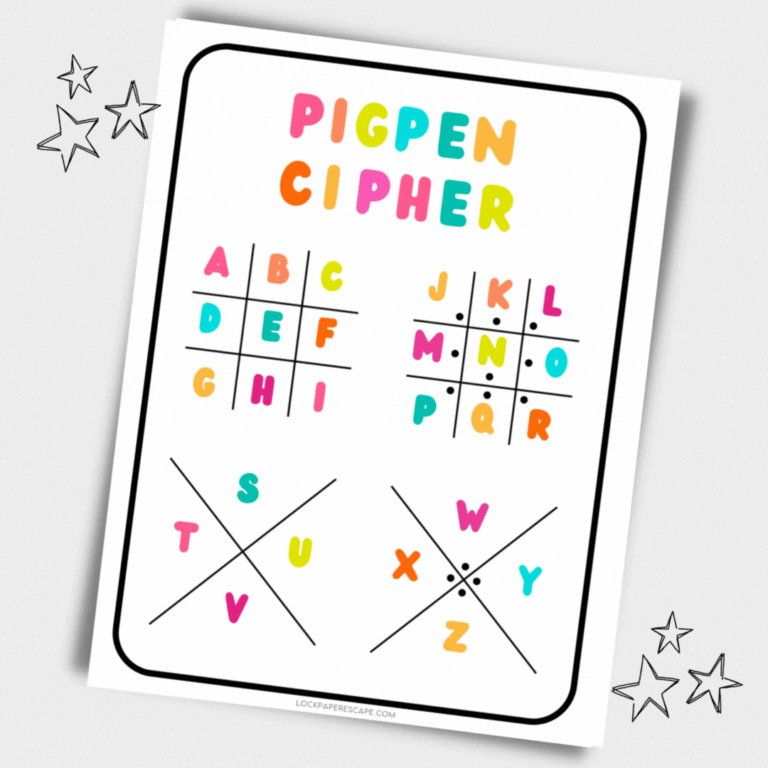
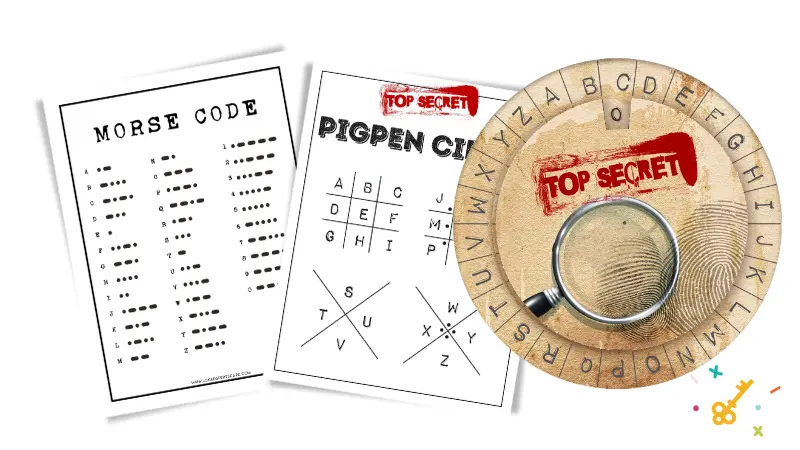
- Secret codes and Ciphers are a lot of fun to include in your game. There are a lot of ready-made codes you can use. Morse code, pigpen cypher and semaphores are just a few that you can easily incorporate. If you are feeling creative, create your very own secret code. Creating your code is an excellent way to personalise your escape game. For a dinosaur-themed escape room, use pictures of different dinosaurs for example to represent each letter of the alphabet.
- Recordable Buttons. You can add sounds, small messages or information the players need to solve a clue. I purchased some from Amazon, and they came in different colours. Having a variety of colours is even better, as you can have the players press buttons in a particular order to reveal your clue. The ones I purchased are intended to train pets to communicate with you. But they are such a great audio addition to a kids escape room.
- Hidden in a Book. Words in a book can reveal clues. Direct players to open a particular book on a specified page and read words from that page. For example, you could be planning a Harry Potter escape room. Tell the players to find the “Chamber of Secrets” on Page 23, line 13, word 5. You can use the same idea for any text. Perhaps a newspaper article, a letter, or a card.
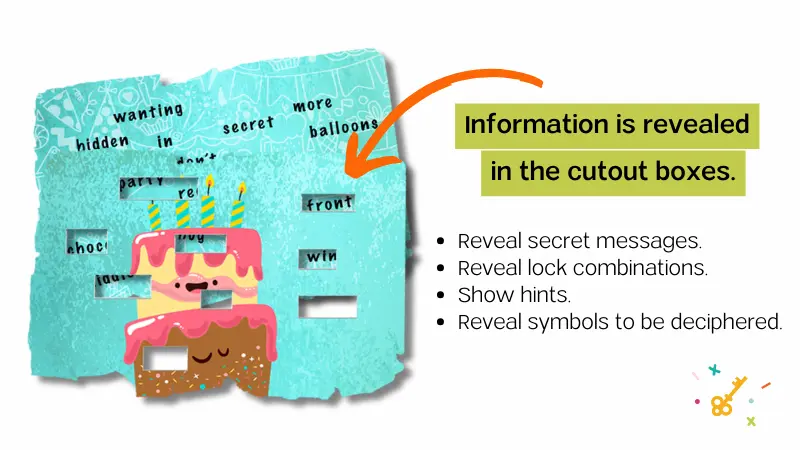
- Overlay Reveal. Overlay puzzles are a lot of fun to include in your kids escape room. Use them to reveal information from a piece of text. A letter complimenting your theme or a fake newspaper page would work. Then, using a piece of card or paper, cut out holes revealing the text you want players to read. This is super simple to do. Up the difficulty level and cut the overlay into pieces that must be assembled first.
- Mirror Mirror on the Wall. Mirrors are an easy addition to a game. Write clues that can only be seen clearly when reflected in a mirror. Pin a poster onto the opposite wall of a mirror to reveal clues, see how long it takes your players to notice this inside your escape room. Make you clues as tricky or as easy as you need. Print a maze onto a large piece of paper. Letters are revealed on the as players follow the route out of the maze. This was a lot of fun watching the kids trying to figure out their left from their right.
Save Time and Buy a Done for you Escape Room!
Escape rooms are a great form of entertainment, with players testing their wits against the clock to solve a collection of puzzles and escape before time runs out. Using some of these escape room ideas, you can create an immersive and engaging experience for your family. They’ll be talking about your fab game for weeks to come.
Kids Escape Rooms
If you love all of the ideas but just want a done for you escape room, check out my collection of ready to go printable escape rooms. you’d like here but this is just to give you an idea of the layout.
Let’s stay connected!
Love this? Make sure to connect on your favorite social platform below for even more fun and games!
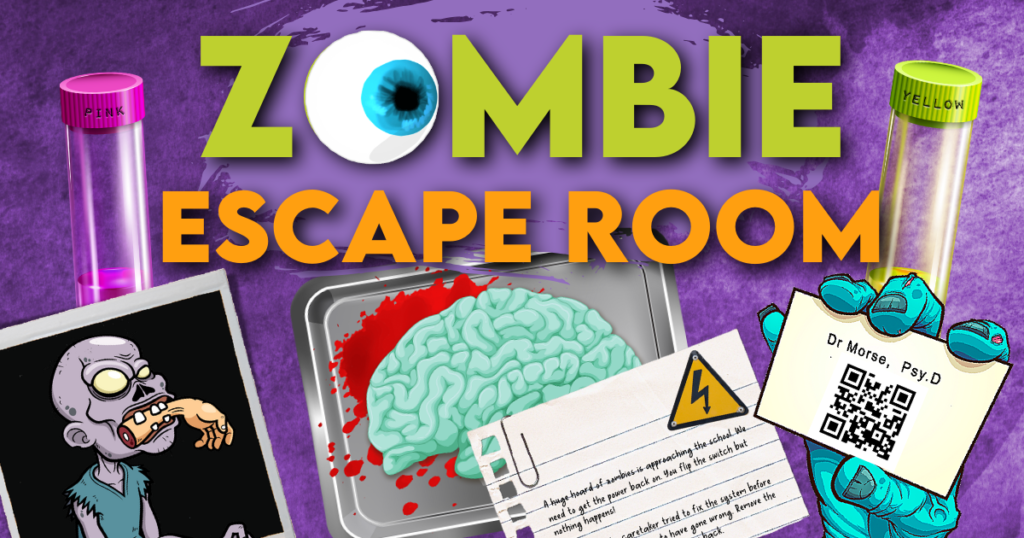
Zombie Escape Room
The zombies are on the loose. Will Dr Pepper become a zombie, and will you survive long enough to save the world? Do you have what it takes to find a way to escape before the zombies get you? Try our fab family Zombie escape game!